Dongpo Pork (Dōngpō ròu)
东坡肉 Dōngpō ròuSay it: dong-poh roh
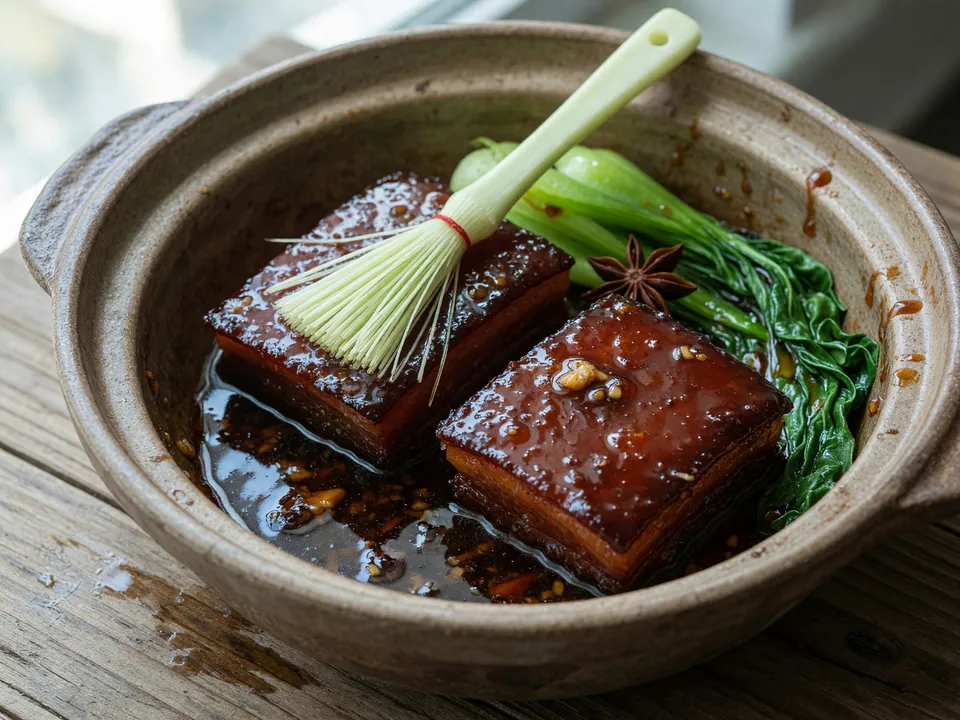
When guests lift these mahogany squares of Dongpo pork to their lips, the silky layers of fat melt instantly while the tender meat falls apart under gentle pressure from chopsticks, releasing a fragrant balance of sweet wine and savory soy that lingers on the palate. This Hangzhou specialty delivers an indulgent yet refined centerpiece perfect for special gatherings or weekend feasts when you want maximum flavor from minimal active effort.
Dongpo Pork (Dōngpō ròu)
东坡肉, Dōngpō ròu
Pronounced dong-poh roh
- Serves
- 6
- Prep
- 40 min
- Cook
- 3 hr
- Total
- 3 hr 40 min
- Level
- Medium
Also nut-free and egg-free.
Allergens: contains gluten, soy. Check labels on packaged ingredients.
Ingredients
Amounts are scaled. Cooking times and pan sizes stay the same.
Method
Fill a large pot with water and bring it to a rolling boil. Submerge the pork belly with the skin facing downward and boil briefly for 5 minutes. Remove, rinse under cool water, then dry the surface completely with paper towels.
Slice the pork into sturdy 2-inch (5 cm) cubes while preserving the skin layer on each piece. For extra stability during cooking, wrap kitchen string around the midsection of every cube if preferred.
Warm the oil inside a sturdy Dutch oven or heavy-bottomed pan set over medium-high temperature. Brown the pork cubes on every face until they develop a light golden hue, requiring roughly 6–8 minutes overall and cooking in separate batches when necessary. Move the seared pieces aside onto a plate.
Decrease the temperature to medium. Toss the cut scallions together with the ginger slices into the same pot and cook briefly for around 1 minute to release their aroma. Nestle the pork cubes back inside, arranging them skin-side upward in a single compact layer.
Incorporate the star anise pods along with the Shaoxing wine, light soy sauce, dark soy sauce, brown sugar, and measured water. The braising liquid needs to reach approximately halfway up the sides of the meat; supplement with extra water only if required to achieve this level.
Raise the heat until the contents reach a soft simmer while removing any surface foam that appears. Secure the lid, lower the flame to its minimum setting, and maintain an extremely gentle simmer for 2 hours, inspecting the pot periodically. Should the liquid drop excessively, introduce several tablespoons of water. Occasionally ladle the cooking liquid across the top of the pork without disturbing the arrangement.
Remove the cover, adjust the heat to medium, and continue simmering another 15–20 minutes until the sauce reduces to a consistency that clings to the back of a spoon. Continue basting the pork generously with this thickening glaze throughout the final reduction.
Lift the pork cubes delicately into individual shallow bowls or onto a communal platter. Drizzle the rich, glossy reduction generously over each portion before serving immediately while hot.
Regional variant: Red-braised pork (hóngshāo ròu)
Slice the pork belly into compact 1-inch (2.5 cm) pieces in place of the larger 2-inch squares. Increase the overall quantity of soy sauce while decreasing the Shaoxing wine, incorporate a few dried red chilies if you wish, then simmer approximately 1 hour until the meat turns tender and develops a shiny coating. This produces a version that leans sweeter and saltier, better suited for regular meals.
Cook's notes
- Select pork belly that displays uniform streaks of meat and fat together with undamaged skin to achieve optimal mouthfeel and layering.
- Maintain the lowest possible flame while the dish simmers so the process stays at a whisper rather than a vigorous bubble, ensuring the fat transforms into a luxurious, melt-in-the-mouth texture.
- Should the reduced sauce turn overly dense or intensely salty, incorporate a small amount of boiling water and stir lightly until the balance feels right again.
Serve with
Steamed white rice or lotus-leaf folded buns, accompanied by briefly boiled baby bok choy or broccoli florets that balance the fatty depth; pair with jasmine tea or gently warmed Shaoxing wine.
Make ahead and storage
Flavor deepens noticeably after resting overnight. Allow the dish to cool fully, store covered in its own sauce inside the refrigerator for up to 3 days, then warm slowly on the stove while adding water if the sauce has thickened excessively.