Black-Eyed Pea Fritters (Acarajé)
Acarajé Say it: ah-kah-rah-ZHEH
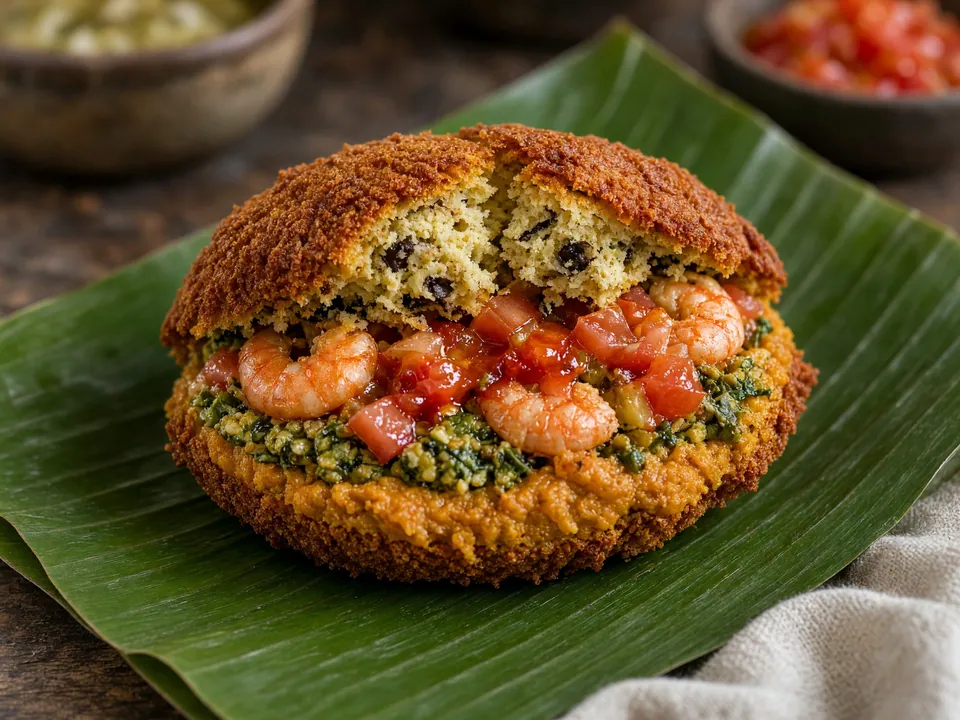
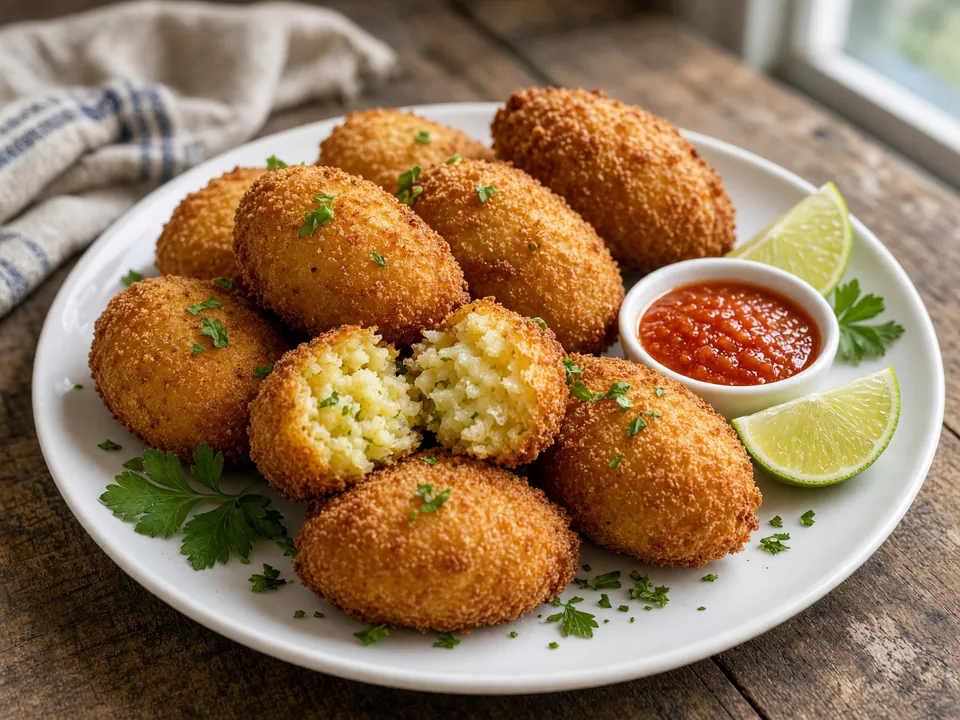
Acarajé is Bahia’s iconic Afro-Brazilian street food: a crisp, deep-fried fritter made from peeled black-eyed peas, split while hot and stuffed with savory shrimp, coconut and dendê palm-oil fillings. Sold from early evening at acarajé stands, especially in Salvador, it is eaten by hand as a snack or light meal. The shell is shatteringly crisp, the inside light and fluffy, and the fillings bring smoky dendê, coconut, nuts and chile. It is a dish of memory, market life and Bahian identity.
Black-Eyed Pea Fritters (Acarajé)
Acarajé
Pronounced ah-kah-rah-ZHEH
- Serves
- 4
- Prep
- 30 min
- Cook
- 1 hr 15 min
- Total
- 1 hr 45 min
- Level
- Medium
Also egg-free.
Allergens: contains gluten, shellfish, nuts, peanuts. Check labels on packaged ingredients.
Ingredients
Amounts are scaled. Cooking times and pan sizes stay the same.
For the fritters
For the vatapá
For the caruru
For the shrimp topping
For the salad and pepper sauce
Method
Put the black-eyed peas in a large bowl, cover with cold water by 3 inches (8 cm), and soak overnight, about 12 hours. Drain, then rub the peas between your hands in a bowl of water to loosen and remove as many skins as possible; rinse and discard the skins.
Blend the peeled peas with the onion and salt in a food processor until you have a thick, slightly grainy paste, adding only 2–3 tbsp (30–45 ml) water if needed. Transfer to a bowl and beat vigorously with a wooden spoon for 10–15 minutes, until the batter lightens, looks airy and falls from the spoon in a soft ribbon.
For the vatapá, soak the bread in the coconut milk until soft, about 5 minutes. Blend it with the cashews, soaked dried shrimp, onion, garlic, water and salt until smooth, then simmer in a saucepan with 1 tbsp (15 ml) dendê, stirring, for 10–12 minutes, until thick enough to hold a spoon track.
For the caruru, blend the peanuts, soaked dried shrimp, onion, water and salt until smooth. Put the okra in a saucepan, pour in the blended mixture and 1 tbsp (15 ml) dendê, and simmer gently for 15–20 minutes, stirring now and then, until the okra is tender and the sauce is thick.
Toss the tomatoes, red onion, cilantro and salt for the salad. Pulse or crush the malagueta peppers with the vinegar, chopped onion and salt for the pepper sauce.
Pat the shrimp dry, season with salt and sauté in 1 tbsp (15 ml) dendê over medium-high heat for 2–3 minutes, until pink and just firm.
Heat the 4 cups (960 ml) dendê in a deep heavy pot to 350°F (175°C); it should be at least 2 inches (5 cm) deep. Drop the batter in 1/4-cup (60-ml) portions into the oil, a few at a time, and fry for 6–8 minutes, turning once, until deeply golden, crisp and puffed.
Drain on a rack or paper towels, then split each fritter along one side while still hot. Fill with vatapá, caruru, shrimp, tomato salad and pepper sauce, and serve immediately.
Regional variants
Some cooks add a spoonful of dried shrimp powder to the batter, and some stands serve acarajé with extra vatapá, caruru or a simple tomato-onion vinagrete. In Afro-Brazilian religious settings, plain acarajé is also prepared as an offering.
Cook's notes
- Use dried black-eyed peas, not canned, and remove as much of the skin as you can; this gives the fritters their light, fluffy interior.
- Keep the dendê at 350°F (175°C); if it is too hot, the fritters brown before the center cooks through.
- If dendê is hard to find, annatto-infused oil gives a similar color, but the flavor will be much milder than true red palm oil.
Serve with
Cold coconut water, a cold beer or a soft drink; extra malagueta sauce on the side.
Make ahead and storage
The batter can be refrigerated for up to 1 day; the fillings can be made 2 days ahead and reheated gently. Fry just before serving.