King Curd (Juju Dhau)
जुजु धौ Juju DhauSay it: JOO-joo DOW
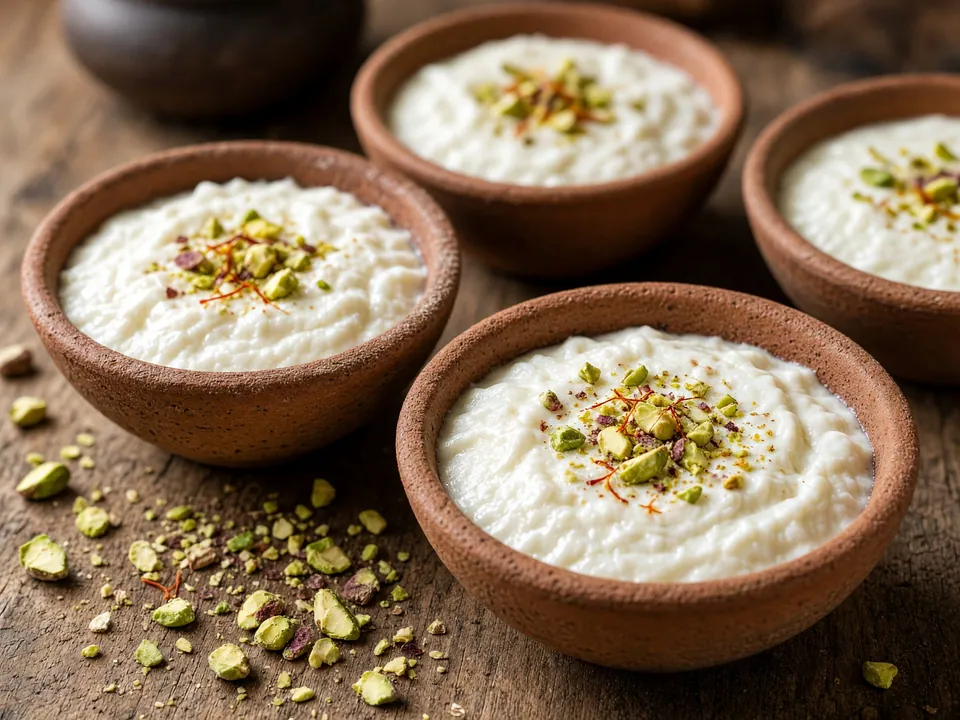
Juju Dhau, literally "king curd," is a legendary yogurt from Bhaktapur in Nepal's Kathmandu Valley. It is traditionally set in small unglazed clay pots that allow just the right amount of whey to seep away, leaving an exceptionally thick, creamy, and mildly sweet yogurt with a delicate skin on top. Eaten as a dessert or special treat during festivals and family celebrations, its luxurious texture and subtle tang make it a beloved symbol of Newari hospitality and craftsmanship.
King Curd (Juju Dhau)
जुजु धौ, Juju Dhau
Pronounced JOO-joo DOW
- Serves
- 4
- Prep
- 15 min
- Cook
- 25 min
- Total
- 40 min
- Level
- Medium
Also nut-free and egg-free.
Allergens: contains milk. Check labels on packaged ingredients.
Ingredients
Amounts are scaled. Cooking times and pan sizes stay the same.
Method
Pour the milk into a heavy-bottomed saucepan and bring to a gentle boil over medium heat, stirring occasionally to prevent scorching. Reduce heat and simmer for 15–20 minutes until the milk has reduced by about one-third and a thin skin forms on the surface.
Remove the pan from the heat and let the milk cool until it reaches 110–115°F (43–46°C). Test by dipping a clean finger; it should feel pleasantly warm but not hot.
In a small bowl, whisk the starter yogurt with a few spoonfuls of the warm milk until smooth, then stir this mixture back into the saucepan until fully combined.
Pour the inoculated milk into clean, dry, unglazed clay pots (4–6 oz / 120–180 ml each) or small heatproof bowls. Cover each pot loosely with a clean cloth or lid.
Place the pots in a warm, draft-free spot (an oven with the light on or an insulated cooler works well) and let them set undisturbed for 6–8 hours or overnight until the yogurt is thick and set with a delicate skin on top.
Once set, refrigerate the pots for at least 2 hours to chill thoroughly before serving.
Regional variants
Some families add a touch of sugar or cardamom to the milk before cooling, though the classic Bhaktapur version relies solely on the natural sweetness of the milk. Modern versions may be made in glass jars, but they lack the characteristic seepage and skin of the clay-pot original.
Cook's notes
- Use the highest-quality whole milk possible; the richer the milk, the creamier the final curd.
- Traditional Bhaktapur clay pots are unglazed and slightly porous, which helps achieve the signature thick texture; if unavailable, small earthenware or ceramic ramekins give the closest result.
- Do not disturb the pots while the yogurt is setting, as movement can prevent a smooth, even curd from forming.
Serve with
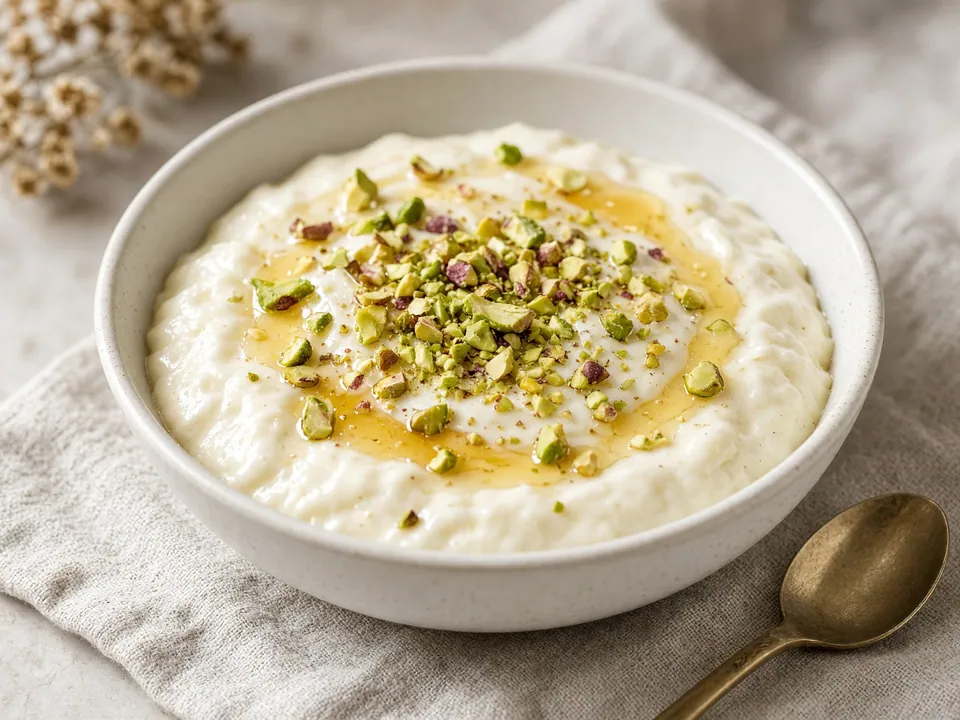
Serve chilled on its own or with a drizzle of honey and chopped pistachios. In Bhaktapur it is often offered as prasad during festivals.
Make ahead and storage
Juju Dhau keeps well in the refrigerator for up to 4 days. The clay pots can be reused after thorough washing and drying.