English Muffin
English muffin Say it: IN-glish MUFF-in
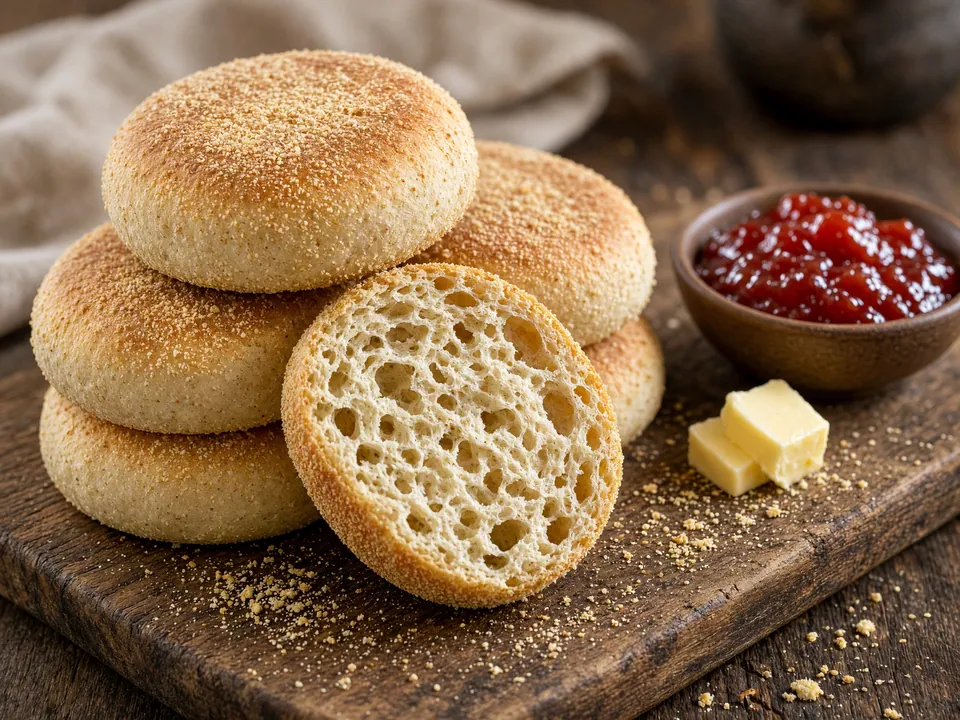
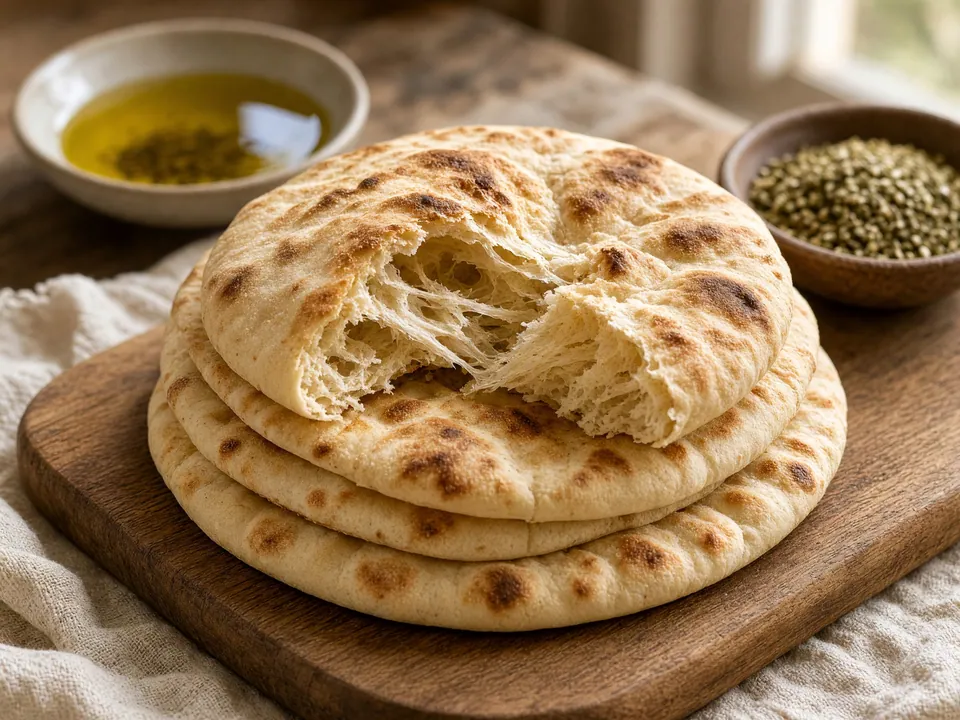
The English muffin is a small, round, flat yeast bread characterized by its nooks and crannies that perfectly catch butter and jam. Originating in the United Kingdom and popularized in Plymouth, these muffins are a breakfast staple eaten split and toasted. They have a soft, chewy interior with a lightly crisp exterior when toasted, making them ideal for breakfast sandwiches or simply spread with butter and marmalade. What makes them special is the distinctive texture created by cooking on a griddle rather than baking in an oven.
English Muffin
English muffin
Pronounced IN-glish MUFF-in
- Serves
- 8
- Prep
- 30 min
- Cook
- 25 min
- Total
- 55 min
- Level
- Medium
Also nut-free and egg-free.
Allergens: contains gluten, milk. Check labels on packaged ingredients.
Ingredients
Amounts are scaled. Cooking times and pan sizes stay the same.
Method
In a large mixing bowl, whisk together the flour, salt, sugar, and instant yeast.
Combine the warm milk, warm water, and melted butter in a measuring jug, then pour into the dry ingredients. Stir until a soft, slightly sticky dough forms.
Turn the dough onto a lightly floured surface and knead for 8-10 minutes until smooth and elastic. The dough should spring back when lightly pressed.
Place the dough in a lightly greased bowl, cover with a clean tea towel, and let it rise in a warm spot for about 1 hour until doubled in size.
Gently deflate the risen dough and roll it out on a surface lightly dusted with cornmeal to 3/4-inch (2 cm) thickness.
Using a 3-inch (7.5 cm) round cutter, cut out 8 circles, re-rolling scraps once if needed. Dust both sides of each round generously with cornmeal.
Place the rounds on a baking sheet dusted with cornmeal, cover loosely, and let them rise for 30 minutes until puffy.
Heat a large cast-iron skillet or griddle over medium-low heat. Cook the muffins in batches for 6-8 minutes per side until deep golden brown on both sides and the sides feel firm when lightly pressed.
Transfer the cooked muffins to a wire rack to cool completely before splitting and toasting.
Regional variants
Modern versions sometimes include additions like raisins, cheese, or herbs, though the plain version remains the most traditional. In the United States, they are often used as the base for eggs Benedict.
Cook's notes
- For the classic nooks and crannies, avoid using a fork to split them; instead use a serrated knife or pull them apart gently with your fingers.
- The muffins should sound hollow when tapped on the bottom when done; if they brown too quickly, lower the heat to ensure they cook through.
- Store in an airtight container for up to 3 days or freeze for longer storage.
Serve with
Butter, jam, marmalade, or as the base for breakfast sandwiches with eggs, bacon, and cheese.
Make ahead and storage
Muffins can be made up to 2 days ahead and stored in an airtight container. Toast before serving. They also freeze well for up to 2 months; thaw and toast directly from frozen.