Bolinhos de Milho Recheados Salvadorenhos (Pupusas)
Pupusas Diga: poo-POO-sahs
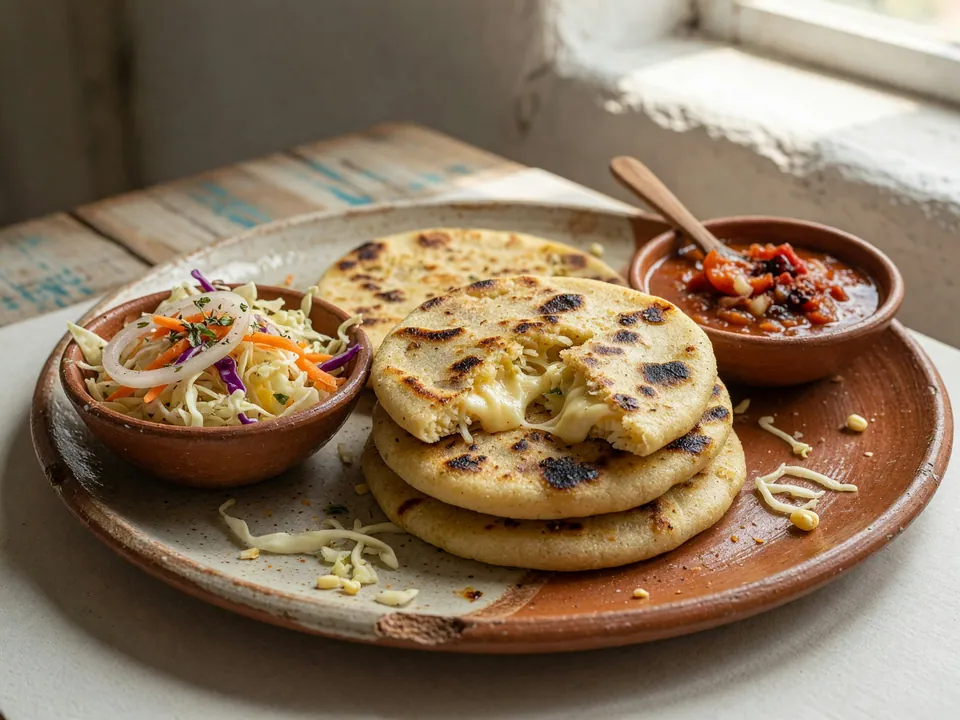
Quando essas pupusas douradas chegam à mesa, a primeira mordida entrega uma crosta crocante de milho que revela um interior macio e fofinho recheado com queijo derretido grudento, criando uma irresistível sensação reconfortante que faz todos quererem repetir. Esta receita direta entrega resultados de qualidade de restaurante em casa e funciona igualmente bem para jantares de dia de semana ou encontros de fim de semana.
Bolinhos de Milho Recheados Salvadorenhos (Pupusas)
Pupusas
Pronúncia poo-POO-sahs
- Rende
- 6
- Preparação
- 45 min
- Cozimento
- 30 min
- Total
- 1 h 15 min
- Nível
- Médio
Também sem nozes e sem ovos.
Alergênicos: contém leite. Verifique os rótulos dos ingredientes embalados.
Ingredientes
As quantidades foram ajustadas. O tempo de cozimento e o tamanho das formas permanecem os mesmos.
For the dough
For the filling and cooking
Modo de preparo
Combine the masa harina and salt in a large mixing bowl. Slowly add the warm water while stirring by hand until the mixture forms a soft, cohesive dough. Knead gently for 2-3 minutes until it resembles the texture of play dough and shows no cracks when pressed. Add an extra tablespoon of water at a time if the dough feels too dry. Cover with a damp cloth and allow it to rest for 10 minutes.
Portion the rested dough into 12 equal balls, each roughly 2 inches (5 cm) in diameter. Keep all portions covered with a damp cloth to prevent drying.
Take one dough ball and press it into a shallow cup shape in your palm, creating a thin well in the center while keeping the walls about 1/4 inch (6 mm) thick. A 3-inch (7.5 cm) flattened round with raised edges works as an alternative shaping method.
Add roughly 2 tablespoons of shredded cheese into the center well. Carefully pull the dough edges together over the filling and seal completely, then reshape into a smooth ball without exposing any cheese.
Using hands lightly coated in oil or water, gently flatten the sealed ball into a disc measuring 4-5 inches (10-12 cm) wide and 1/2 inch (1.25 cm) thick. Repair any cracks immediately with a small piece of extra dough.
Preheat a comal, cast-iron skillet, or nonstick pan to medium or medium-high heat and brush with a thin layer of oil. Cook 2-3 pupusas at a time for 3-5 minutes on each side until they turn golden with darker toasted areas and show slight puffing.
Move finished pupusas to a plate and cover with a clean cloth to stay warm while the remaining batch cooks. Serve immediately alongside traditional accompaniments.
Variante regional: Pupusa Revuelta (pupusa revuelta)
For the popular mixed filling, blend 1/2 cup (120 g) refried beans with 1/2 cup (120 g) finely chopped chicharrón (cooked pork rind or crumbled bacon) and 1/2 cup (60 g) shredded cheese. Portion about 2 tablespoons of this mixture into each pupusa and follow the identical shaping instructions; the beans act as a binder to keep the chicharrón securely inside the dough.
Notas do cozinheiro
- Prepare a small bowl of water with a dash of oil to moisten hands during shaping; this stops the dough from sticking and creates tighter seals around the filling.
- Limit filling to approximately 2 tablespoons per pupusa to achieve a rich melted center while avoiding leaks when the cakes are flattened.
- Traditional comals or well-seasoned cast-iron pans produce the most attractive browning; allow pupusas to cook undisturbed at first so a proper crust can form.
Sirva com
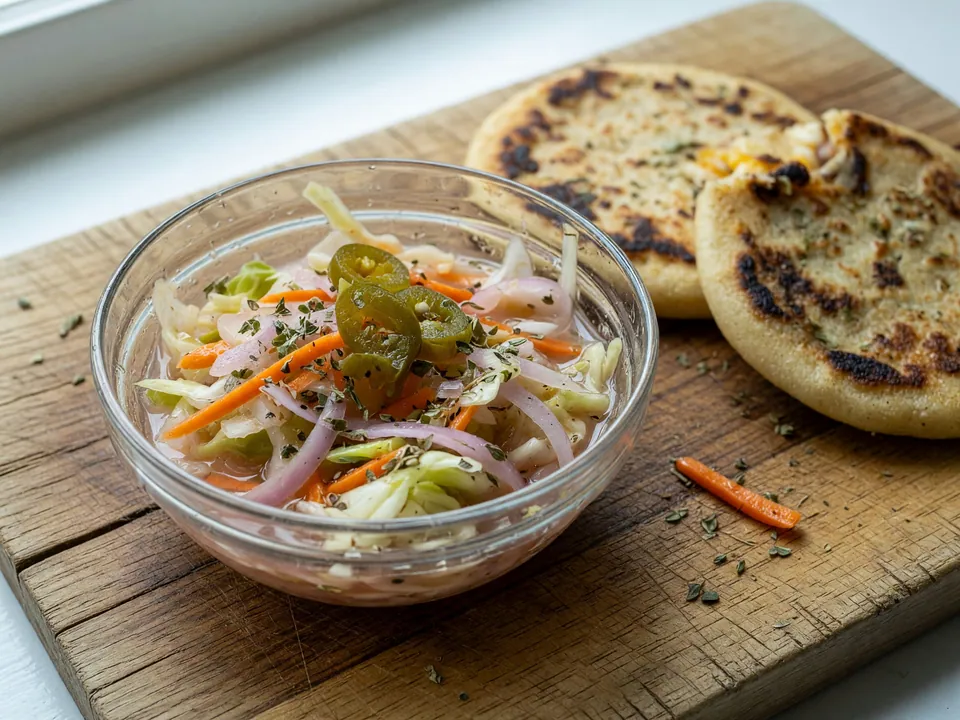
Always serve with curtido, a lightly fermented cabbage and carrot slaw, and salsa roja; a cold horchata or ensalada drink is common alongside.
Antecipe e armazenamento
The dough can be made up to 2 hours ahead and kept covered at room temperature. Cooked pupusas reheat well in a dry skillet over medium heat for 2 minutes per side.