Ragoût de poisson de Marseille (Bouillabaisse)
Bouillabaisse Dites-le : boo-yah-BESS
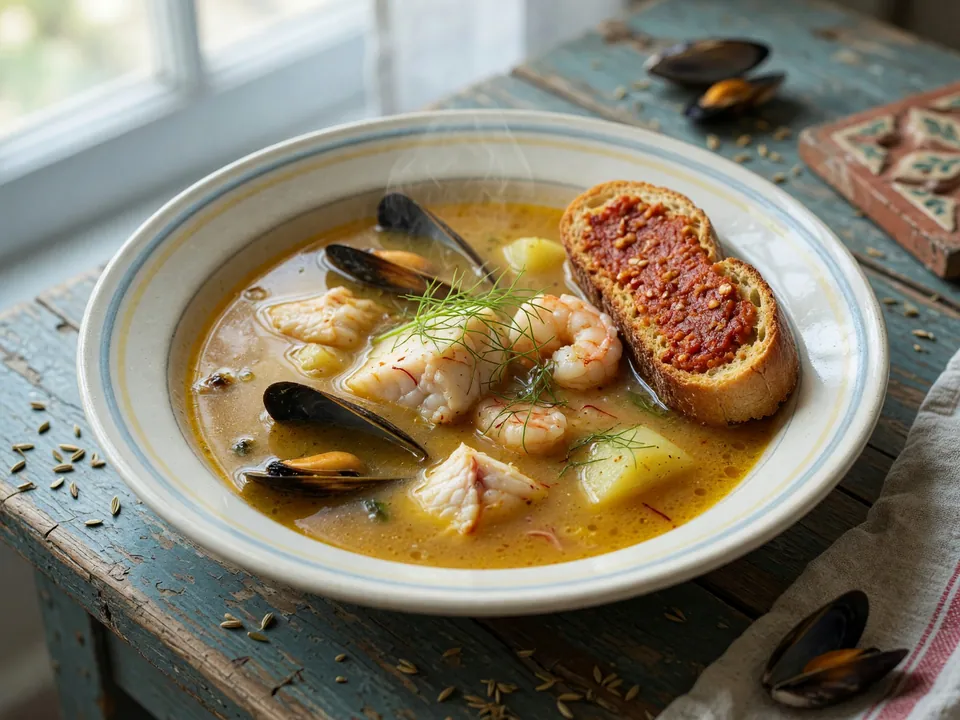
Lorsque versé dans des bols, ce bouillon doré offre une profondeur savoureuse riche imprégnée de safran et d'orange, tandis que des morceaux tendres de poisson blanc et de coquillages sucrés fondent en bouche contre la croquante bouchée de toast tartiné de rouille. La recette transforme de simples parures de fruits de mer en un impressionnant plat unique qui apporte les saveurs de la Provence directement à table en moins de deux heures.
Ragoût de poisson de Marseille (Bouillabaisse)
Bouillabaisse
Prononcé boo-yah-BESS
- Pour
- 6
- Préparation
- 40 min
- Cuisson
- 1 h 15 min
- Total
- 1 h 55 min
- Niveau
- Moyen
Aussi sans noix.
Allergènes : contient gluten, œuf, poisson, fruits de mer, céleri. Vérifiez les étiquettes des ingrédients emballés.
Ingrédients
Les quantités sont ajustées. Les temps de cuisson et les tailles de plats restent les mêmes.
Broth and fish
Croutons and rouille
Méthode
Warm 1/4 cup (60 ml) olive oil in a heavy Dutch oven placed over medium heat. Stir in the thinly sliced fennel, leek rings and chopped onions, cooking until the vegetables soften and turn translucent, roughly 8 minutes. Mix in the smashed garlic together with the tomato paste and continue cooking for another minute.
Pour in the chopped tomatoes, dry white wine, water, fish bones and heads, orange zest strip, saffron threads, bouquet garni, 1 tsp salt and the black pepper. Raise the heat until the liquid boils, then lower it to maintain a gentle simmer. Leave uncovered for 30 minutes while skimming away any foam that collects on top.
At the same time prepare the croutons by brushing the baguette slices with 2 tbsp olive oil and toasting them in a 350°F (175°C) oven or a dry frying pan until they become golden and crunchy, about 10 minutes. Reserve until needed.
While the stock simmers, place the cleaned mussels in a separate wide pan along with 1/4 cup (60 ml) of the measured water. Cover tightly and steam over high heat until all shells open, which takes 2–4 minutes. Pour the cooking liquid through a fine strainer and save it; remove the mussels from their shells, discarding any that remained closed.
Pass the finished broth through a fine-mesh strainer into a clean bowl, pressing lightly on the solids to release every drop of liquid. Throw away the bones, aromatics and herbs. Return the clear broth to the Dutch oven, slide in the potato slices, bring back to a simmer and cook for 10 minutes until the potatoes feel just tender when tested with a knife.
Introduce the densest fish pieces such as monkfish, snapper or halibut into the bubbling broth and let them cook for 6 minutes. Follow with the remaining fish chunks plus the shell-on shrimp, simmering gently until the fish turns opaque throughout and the shrimp become pink, an additional 4–5 minutes. Fold in the shelled mussels along with their reserved strained liquid and warm everything for 1 minute longer. Check seasoning and add extra salt if required.
For the rouille, soak the torn white bread in 1/4 cup (60 ml) hot broth taken from the pot for 2 minutes. Move the softened bread to a blender or mortar along with the 4 peeled garlic cloves, cayenne or seeded chili, egg yolk and the optional crushed saffron. Process or mash into a smooth paste, then gradually stream in the 1/2 cup (120 ml) extra-virgin olive oil while blending or whisking nonstop until the sauce thickens and shines. Season with salt and loosen with a splash more broth if the texture seems overly firm.
Divide the steaming broth among wide soup plates, distributing several pieces of fish, shrimp, mussels and potato slices into each serving. Smear the rouille generously onto the toasted croutons and place one or two in every bowl. Finish with a scattering of saved fennel fronds if available and bring the bowls to the table immediately.
Variante régionale : Marseille restaurant-style service (bouillabaisse servie en deux services)
Follow the identical broth, fish and potato instructions, yet remove the cooked fish and potatoes with a slotted spoon and display them on a warmed platter. Ladle the hot broth over rouille-spread croutons into wide soup bowls, then present the platter separately. This traditional Marseille method prevents overcooking the seafood and allows diners to add as much fish as they wish.
Notes du cuisinier
- Select the freshest seafood available and request non-oily white fish bones and heads from your fish seller because they build the broth’s rich texture.
- When Mediterranean rock fish such as rascasse, gurnard or weever can be found, include them among the fish and in the stock since they supply the signature taste of authentic bouillabaisse.
- Maintain only the slightest simmer once any fish enters the pot because vigorous boiling causes the pieces to fall apart.
Servir avec
Serve with additional rouille-topped croutons and a glass of cold dry white wine or Provençal rosé.
Préparation à l'avance et conservation
The broth can be made up to 1 day ahead and refrigerated; cook the fish and potatoes just before serving. Rouille keeps covered in the fridge for 2 days.