La Paz Vegetable Platter (Plato Paceño)
Plato paceño Say it: PLAH-toh pah-SAY-nyoh
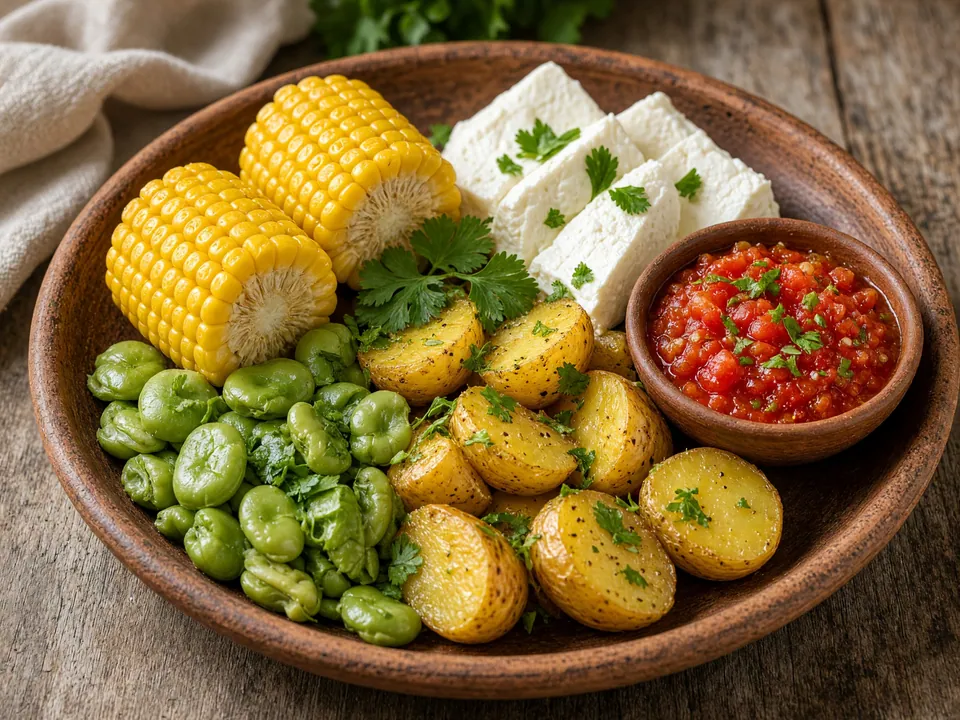
Plato paceño is a beloved traditional vegetable dish from the high-altitude La Paz department of Bolivia. It showcases the robust Andean staples of fava beans, corn, potatoes, and cheese, all brought together with a spicy llajwa sauce. Eaten year-round but especially during the Fiesta de la Virgen de la Candelaria in February, it is hearty, colorful, and deeply comforting. The combination of textures—creamy cheese, starchy potatoes, and sweet corn—makes it a satisfying meat-free main course that reflects the simple, nourishing cooking of the Bolivian Altiplano.
La Paz Vegetable Platter (Plato Paceño)
Plato paceño
Pronounced PLAH-toh pah-SAY-nyoh
- Serves
- 4
- Prep
- 25 min
- Cook
- 35 min
- Total
- 1 hr
- Level
- Medium
Also nut-free and egg-free.
Allergens: contains milk. Check labels on packaged ingredients.
Ingredients
Amounts are scaled. Cooking times and pan sizes stay the same.
For the llajwa sauce
Method
Bring a large pot of salted water to a boil. Add the potatoes and cook for 10 minutes.
Add the corn pieces and continue boiling for another 8 minutes, then add the fava beans and cook 5–7 minutes more until all vegetables are tender but not mushy. Drain and keep warm.
While the vegetables cook, make the llajwa. blend the tomatoes, onion, chiles, cilantro, vinegar, and salt in a food processor or blender until a chunky salsa forms. Taste and adjust salt or heat. Set aside.
Heat the vegetable oil in a large skillet over medium heat. Add the chopped onion and sauté until soft and translucent, about 5 minutes.
Stir in the chopped tomatoes, cumin, oregano, and a pinch of salt. Cook for 6–8 minutes until the mixture thickens into a light sauce.
Reduce heat to low. Gently lay the cheese slices in the skillet and warm them for 2–3 minutes on each side until they soften and become slightly golden but do not fully melt.
Arrange the warm potatoes, corn, and fava beans on a large serving platter. Place the warmed cheese slices on top.
Spoon the cooked tomato-onion sauce over the vegetables and cheese. Serve immediately with a bowl of fresh llajwa on the side.
Regional variants
Some families add a fried egg on top of each serving or include a small portion of charque (dried meat) for a heartier version, though the classic La Paz plato paceño remains vegetarian.
Cook's notes
- If fresh fava beans are unavailable, frozen work perfectly; peel the outer skin after cooking if you prefer a more tender texture.
- Adjust the heat in the llajwa to your tolerance—traditional versions from La Paz are quite spicy.
- Use a firm, fresh Bolivian-style cheese that holds its shape when heated; queso fresco or a mild farmer’s cheese are good substitutes.
Serve with
Fresh llajwa sauce, chuño (freeze-dried potato) if available, and a cold glass of chicha or beer.
Make ahead and storage
The vegetables and llajwa can be prepared up to 4 hours ahead and gently reheated; warm the cheese just before serving.