Pitsi-Pitsi (Pichi-Pichi)
Pichi-pichi Say it: pee-chee pee-chee
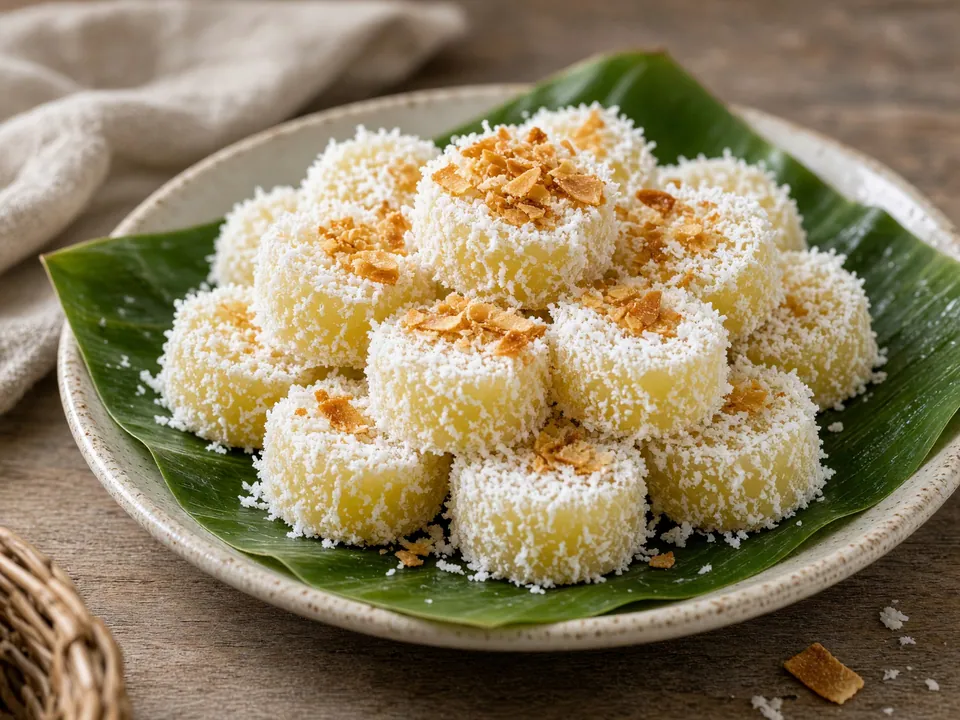
Pichi-pichi is a classic Filipino dessert from the Province of Quezon made from steamed cassava. The translucent, chewy cylinders are coated in fresh grated coconut and often topped with a sprinkle of toasted coconut or cheese. Sweet, mildly flavored, and pleasantly springy in texture, these bites are a favorite at fiestas, family gatherings, and everyday merienda. The simplicity of cassava, sugar, and coconut makes it a beloved traditional treat that highlights the natural ingredients of the region.
Pitsi-Pitsi (Pichi-Pichi)
Pichi-pichi
Pronounced pee-chee pee-chee
- Serves
- 6
- Prep
- 25 min
- Cook
- 45 min
- Total
- 1 hr 10 min
- Level
- Easy
Also nut-free and egg-free.
Allergens: none of the major allergens in the listed ingredients. Check labels on packaged ingredients.
Ingredients
Amounts are scaled. Cooking times and pan sizes stay the same.
Method
Peel the cassava, rinse well, and grate it finely using a food processor or hand grater. Squeeze the grated cassava in a clean kitchen towel or cheesecloth to remove excess liquid.
In a large mixing bowl, combine the squeezed cassava, sugar, water, pandan extract (or pandan leaves), and salt. Stir until the sugar completely dissolves and the mixture is smooth and thick.
Prepare a steamer by bringing water to a boil. Grease small cylindrical molds, banana leaf cups, or an 8-inch square pan lightly with oil.
Pour the cassava mixture into the molds or pan, filling about three-quarters full. Steam over medium heat for 35-45 minutes until the mixture becomes translucent, firm, and no longer sticky in the center.
Remove from the steamer and allow to cool completely, about 30 minutes. The pichi-pichi will firm up as it cools.
If using a pan, cut the cooled cassava cake into 1-inch (2.5 cm) cubes or cylinders. Roll each piece generously in fresh grated coconut until fully coated.
Arrange on a serving plate and sprinkle with toasted grated coconut or grated cheese if desired. Serve at room temperature.
Regional variants
Some regions add ube (purple yam) extract for a vibrant purple version, while others mix in young coconut strips. Modern versions occasionally use food coloring for rainbow pichi-pichi sold at markets.
Cook's notes
- Use fresh cassava for the best chewy texture; frozen grated cassava works in a pinch but may be slightly softer.
- Squeezing out the liquid is essential to achieve the signature springy, non-sticky consistency.
- Pandi leaves or extract give the traditional subtle aroma; vanilla can be used as a substitute if unavailable.
Serve with
Hot coffee, tsokolate (Filipino hot chocolate), or as part of a merienda spread with puto and other kakanin.
Make ahead and storage
Pichi-pichi can be made a day ahead and stored in the refrigerator. Bring to room temperature before serving; the coconut coating is best added the day it is served.