Singapore Oyster Omelette (Orh Luak)
蚵仔煎 Orh LuakSay it: or-luak
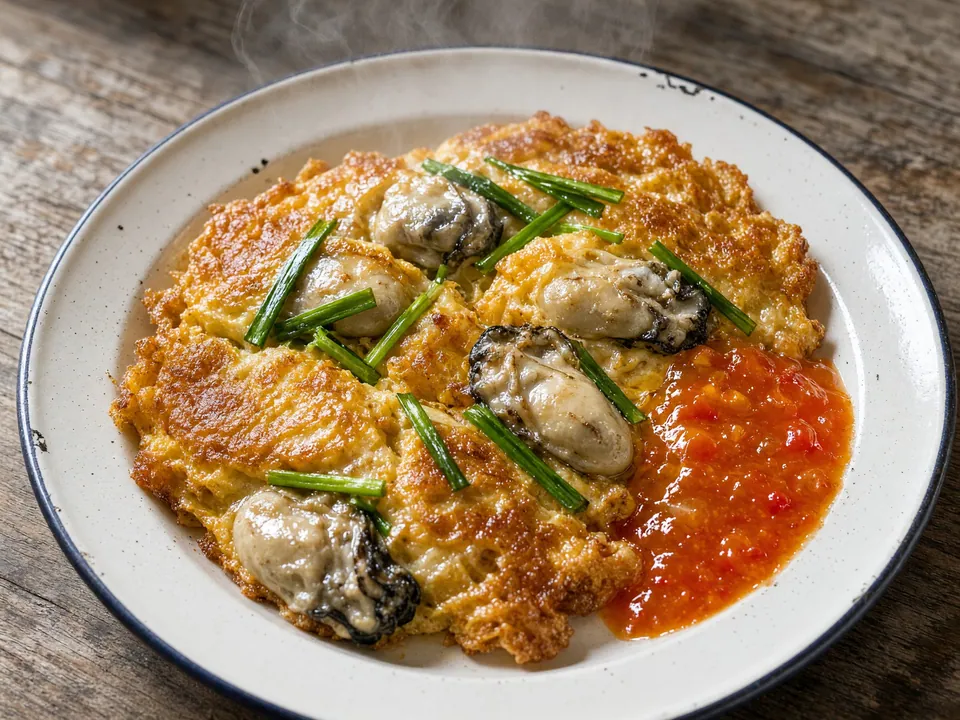
Orh Luak is a beloved Singaporean street-food classic found in hawker centres nationwide. Fresh oysters are gently cooked inside a thin, crispy starch-thickened egg omelette that is both silky and chewy. The dish is finished with a drizzle of sweet-spicy chili sauce that cuts through the rich, briny flavours. Eaten at any time of day, it perfectly showcases the multicultural influences that define Singaporean cooking.
Singapore Oyster Omelette (Orh Luak)
蚵仔煎, Orh Luak
Pronounced or-luak
- Serves
- 2
- Prep
- 10 min
- Cook
- 8 min
- Total
- 18 min
- Level
- Medium
Also nut-free.
Allergens: contains egg, fish, shellfish. Check labels on packaged ingredients.
Ingredients
Amounts are scaled. Cooking times and pan sizes stay the same.
Method
In a small bowl, whisk together the sweet potato starch and water until smooth to make a slurry. Set aside.
Crack the eggs into a separate bowl, add the fish sauce and white pepper, and beat lightly until just combined.
Heat a well-seasoned wok or non-stick skillet over high heat until very hot. Add 1 tablespoon of the oil and swirl to coat.
Pour in the starch slurry; it will immediately form a thin, lacy pancake. Let it set for 10-15 seconds until the edges begin to crisp and turn golden.
Pour the beaten eggs over the starch pancake. Scatter the minced garlic and Chinese chives evenly across the surface.
When the eggs are about half set, gently arrange the oysters on top, pressing them lightly into the mixture.
Drizzle the remaining 1 tablespoon of oil around the edges of the omelette. Cook for another 1-2 minutes until the bottom is golden and crisp.
Carefully flip the omelette (or fold it in half) and cook the second side for 30-45 seconds until the oysters are just cooked through and the edges are crispy.
Slide onto a plate and serve immediately with sweet chili sauce on the side.
Regional variants
Some hawkers add a handful of bean sprouts with the chives, while others serve a more runny, less crisp version popular in parts of Malaysia. Modern versions occasionally include grated cheese or extra garlic.
Cook's notes
- Use very fresh, small oysters; larger ones can be halved. Drain them well before adding to prevent excess liquid.
- A hot wok is essential for the signature crispy lacy edges; preheat thoroughly before adding the starch slurry.
- Sweet potato starch gives the best chewy-crisp texture; tapioca starch is a good substitute if unavailable.
Serve with
Sweet chili sauce and a cold glass of barley water or bandung.
Make ahead and storage
Best eaten fresh from the wok; the omelette loses its crisp texture upon reheating.