Argentine Locro (Locro)
Locro Say it: LOH-kroh
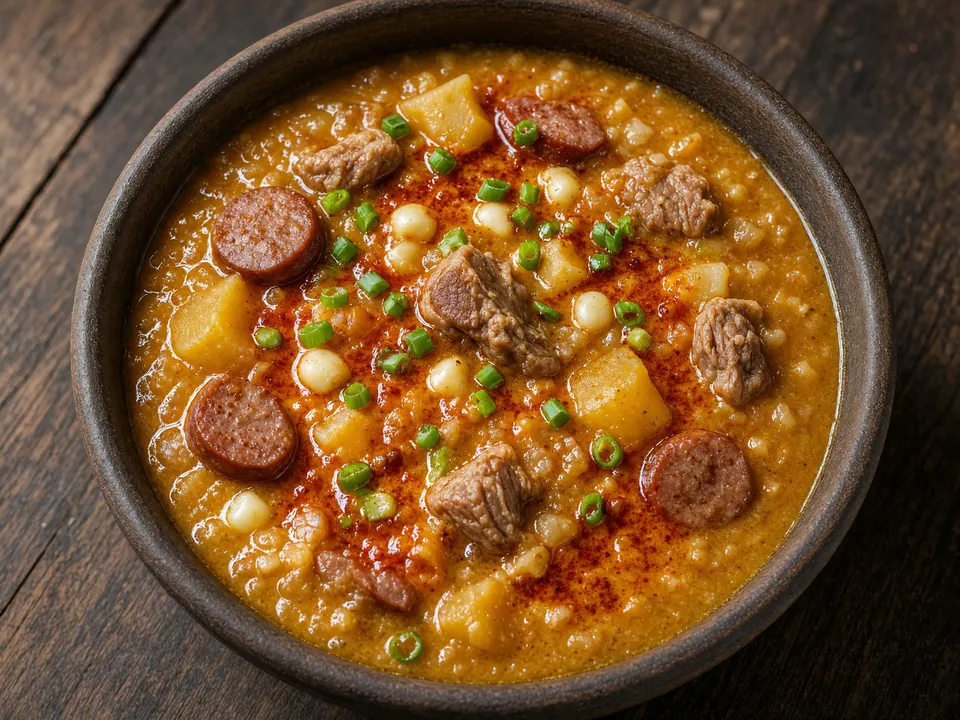
Locro is a thick, comforting stew that forms the heart of Argentine winter tables and national celebrations. Rooted in Andean indigenous traditions and embraced across Argentina, it is especially eaten on May 25 for Revolution Day. Slow-simmered with white corn, beans, squash, and a mix of meats, it develops a rich, earthy flavor and creamy texture. A final drizzle of fiery paprika oil brings the signature spicy kick that makes this dish unforgettable.
Argentine Locro (Locro)
Locro
Pronounced LOH-kroh
- Serves
- 6
- Prep
- 30 min
- Cook
- 3 hr
- Total
- 3 hr 30 min
- Level
- Medium
Also nut-free and egg-free.
Allergens: none of the major allergens in the listed ingredients. Check labels on packaged ingredients.
Ingredients
Amounts are scaled. Cooking times and pan sizes stay the same.
For the colorante (paprika oil)
Method
The night before serving, rinse the dried white corn and beans separately, cover with cold water, and soak overnight. Drain and rinse well before using.
In a large heavy pot or Dutch oven, heat 2 tbsp (30 ml) of the lard or oil over medium-high heat. Brown the pork, beef, and sausage pieces in batches until well colored, about 8-10 minutes total. Transfer the meats to a plate and set aside.
Reduce heat to medium. Add the remaining 1 tbsp (15 ml) fat to the pot, then cook the chopped onion and minced garlic for 5-6 minutes until soft and translucent.
Stir in the cumin, 1 tsp (5 ml) of the sweet paprika, oregano, salt, pepper, and bay leaves. Cook for 30 seconds until fragrant.
Return the browned meats to the pot along with any juices. Add the drained corn, beans, squash cubes, and 8 cups (1.9 L) of water or stock. Bring to a boil, skimming any foam that rises.
Reduce to a very gentle simmer, cover partially, and cook for 2½ to 3 hours, stirring every 30 minutes. The corn should burst and soften, the beans become creamy, the squash mostly melt into the broth, and the meats become fork-tender. Add a little hot water if the stew thickens too much.
While the locro simmers, make the colorante. heat 3 tbsp (45 ml) oil in a small saucepan until hot but not smoking. Remove from heat and stir in 1 tbsp (15 ml) sweet paprika until bright red and fragrant. Set aside.
Taste the finished locro and adjust salt and pepper. Remove the bay leaves.
Ladle the thick stew into deep bowls. Drizzle each portion generously with the paprika oil and sprinkle with sliced scallions. Serve piping hot.
Regional variants
Northern Argentine and Bolivian versions often add tripe (mondongo) or more smoked meats. Some modern adaptations lighten the recipe with chicken or add fresh corn kernels near the end for extra texture and sweetness.
Cook's notes
- Traditional locro uses cracked dried white corn; if unavailable, high-quality canned or frozen hominy makes an excellent substitute, though reduce cooking time by about 45 minutes.
- The stew improves dramatically after resting; many Argentine families prepare it the day before and gently reheat it so the flavors meld.
- Stir carefully toward the end to avoid breaking up the tender squash completely while still achieving the characteristic thick, porridge-like consistency.
Serve with
Crusty bread and a full-bodied Argentine red wine such as Malbec.
Make ahead and storage
Locro tastes even better the next day. Refrigerate up to 4 days or freeze for up to 3 months. Reheat gently on the stovetop, adding a splash of water if needed to loosen.