Tunisian Kafteji (Kafteji)
كفتاجي KaftejiSay it: kaf-TEH-jee
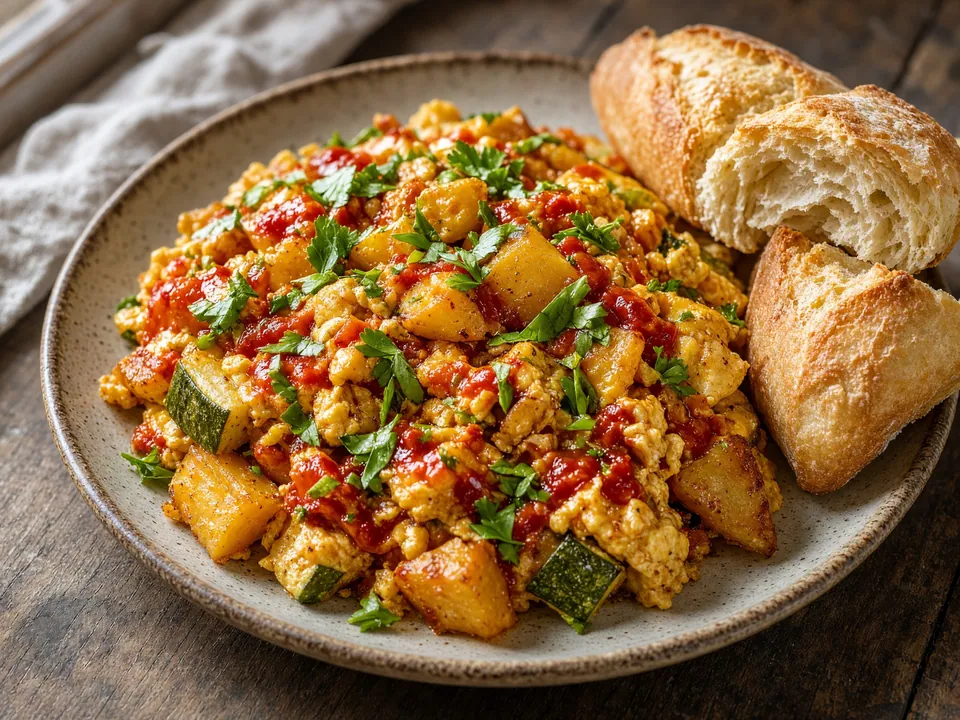
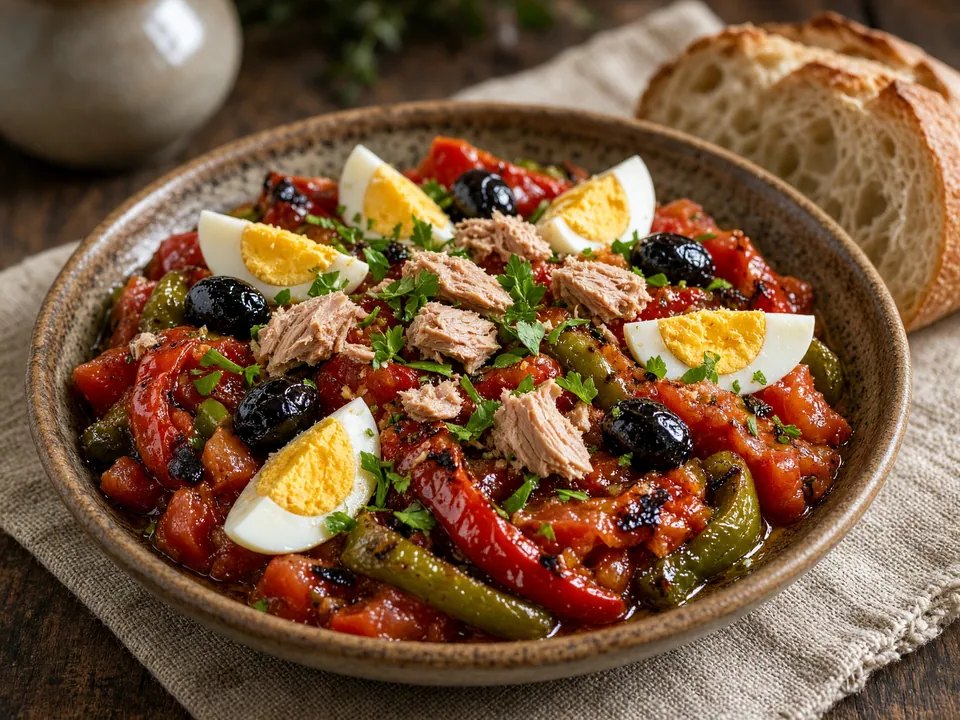
Kafteji is a beloved Tunisian street-food classic from the bustling markets of Tunis. A colorful medley of fried vegetables—potatoes, bell peppers, zucchini, and tomatoes—is roughly chopped together on a large wooden board, then gently scrambled with eggs until just set. The result is a hearty, slightly spicy, and deeply satisfying dish that balances soft and crispy textures with the bright flavors of North African spices. It is typically eaten as a quick lunch or late-night snack, often stuffed into a baguette or served on its own with harissa and bread.
Tunisian Kafteji (Kafteji)
كفتاجي, Kafteji
Pronounced kaf-TEH-jee
- Serves
- 4
- Prep
- 25 min
- Cook
- 30 min
- Total
- 55 min
- Level
- Medium
Also nut-free.
Allergens: contains egg. Check labels on packaged ingredients.
Ingredients
Amounts are scaled. Cooking times and pan sizes stay the same.
Method
Heat ⅓ cup (80 ml) of the oil in a large deep skillet over medium-high heat. Fry the potato cubes in batches until golden and crisp on the outside but tender inside, about 8–10 minutes. Remove with a slotted spoon and drain on paper towels.
In the same skillet, add the bell peppers and fry for 4–5 minutes until blistered and softened. Transfer to the paper towels with the potatoes.
Add the zucchini or squash to the pan and cook for 5 minutes until lightly browned and just tender. Remove and set aside with the other vegetables.
Reduce heat to medium. Add the remaining oil if needed, then sauté the chopped onion and garlic for 3–4 minutes until soft and fragrant. Stir in the tomatoes, harissa, cumin, paprika, and salt. Cook for 6–7 minutes until the tomatoes break down into a thick sauce.
Return all the fried vegetables to the skillet. Gently mix everything together, chopping lightly with a spatula or the edge of a large spoon to create a rustic, chunky texture.
Pour the beaten eggs over the vegetable mixture. Stir gently and cook for 2–3 minutes until the eggs are just set but still moist, like soft scrambled eggs.
Taste and adjust seasoning with more salt or harissa. Remove from heat and sprinkle with chopped parsley or cilantro.
Serve immediately while hot, either on a plate or stuffed into split baguettes.
Regional variants
Some home cooks add a handful of chopped fresh chili or replace the zucchini with eggplant. In certain regions a little preserved lemon is added for brightness. Modern versions occasionally include canned tuna or merguez sausage for a heartier meal.
Cook's notes
- The vegetables should be fried until they have crispy edges but remain tender; this gives kafteji its signature texture.
- Traditional street vendors chop the mixture vigorously on a large wooden board with a curved double-handled knife called a “mezzaluna.” At home, a sturdy spatula works well.
- Adjust the heat level to your preference—authentic Tunisian versions are usually quite spicy from both harissa and the frying oil.
Serve with
Fresh baguette or Tunisian bread, extra harissa, and a side of olives or Tunisian salad (salade mechouia).
Make ahead and storage
Best eaten fresh, but leftovers can be refrigerated up to 2 days and gently reheated in a skillet with a splash of water.