Sour Curry (Kaeng Som)
แกงส้ม Kaeng SomSay it: kang som
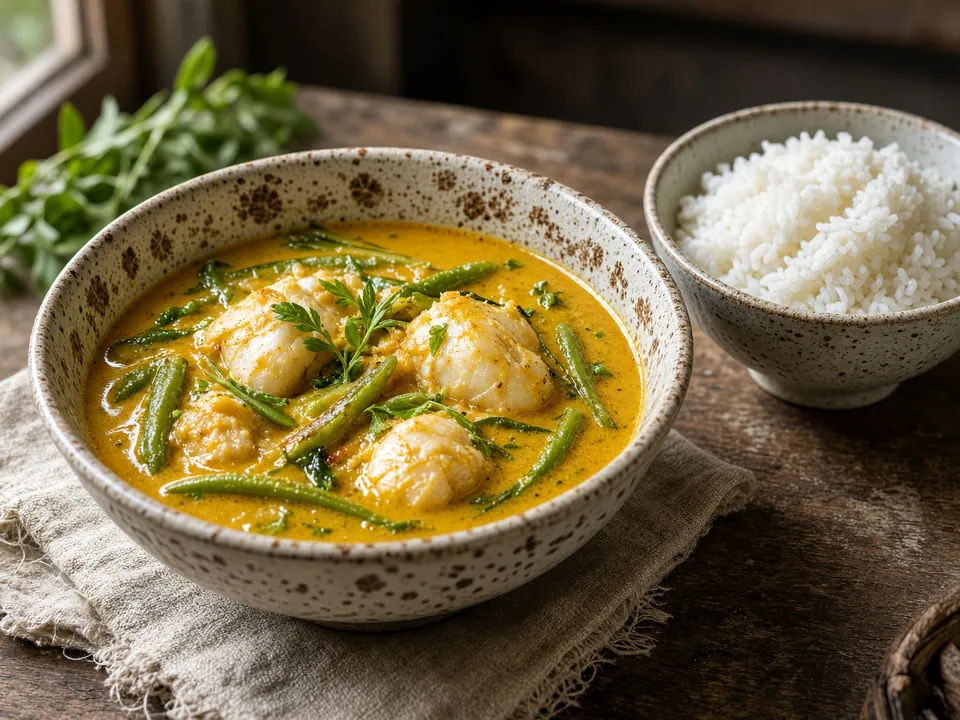
Kaeng Som is a traditional Thai sour curry that balances tangy, spicy, and savory flavors. Popular in Central and Southern Thailand, this curry features tamarind as its souring agent without the addition of coconut milk, making it lighter than many Thai curries. It's typically prepared with fish and seasonal vegetables, creating a vibrant, comforting dish that's perfect with steamed rice. The bright yellow-orange color comes from turmeric, while the distinctive sourness gives it a refreshing quality that's uniquely Thai.
Sour Curry (Kaeng Som)
แกงส้ม, Kaeng Som
Pronounced kang som
- Serves
- 4
- Prep
- 20 min
- Cook
- 40 min
- Total
- 1 hr
- Level
- Medium
Also nut-free and egg-free.
Allergens: contains fish, shellfish. Check labels on packaged ingredients.
Ingredients
Amounts are scaled. Cooking times and pan sizes stay the same.
For the curry paste:
For the curry:
Method
Prepare the curry paste by grinding all paste ingredients in a mortar and pestle or food processor until smooth, adding a little oil if needed to help the blending process.
Heat 2 tablespoons of vegetable oil in a large pot over medium heat. Add the curry paste and cook for 3-4 minutes until fragrant, stirring constantly to prevent sticking.
Pour in the water or fish stock and tamarind mixture, stirring well. Bring to a gentle simmer and cook for 5 minutes.
Add the fish sauce and palm sugar, stirring until dissolved. Taste and adjust seasoning if needed.
Add the pumpkin or butternut squash and cook for 5 minutes until slightly tender.
Add the fish pieces and green beans, cooking for 3-4 minutes until the fish is opaque and just cooked through.
Add the cabbage and cook for 2-3 minutes more until the vegetables are crisp-tender.
Remove from heat and stir in the Thai basil, cilantro, and sawtooth herb (if using). Serve immediately with steamed jasmine rice.
Regional variant: Kaeng Som Pla (Sour Curry with Fish)
In Southern Thailand, Kaeng Som often includes fermented fish paste (pla ra) for additional umami depth. The curry may also use shrimp instead of fish and sometimes includes bamboo shoots or other local vegetables not found in Central Thai versions.
Cook's notes
- For a spicier curry, add more fresh red chilies to the paste or garnish with sliced chilies when serving.
- If tamarind paste is unavailable, substitute with 2 tablespoons of lime juice mixed with 1 teaspoon of brown sugar.
- This curry is best enjoyed fresh but can be refrigerated for up to 2 days. Reheat gently and add fresh herbs before serving.
Serve with
Steamed jasmine rice and fresh vegetables like cucumber and shallots
Make ahead and storage
The curry paste can be made ahead and refrigerated for up to a week. The complete curry is best eaten fresh but can be stored refrigerated for 2 days; reheat gently and add fresh herbs.