Pakistani Chapati (Chapati)
چپاتی ChapatiSay it: chuh-PAH-tee
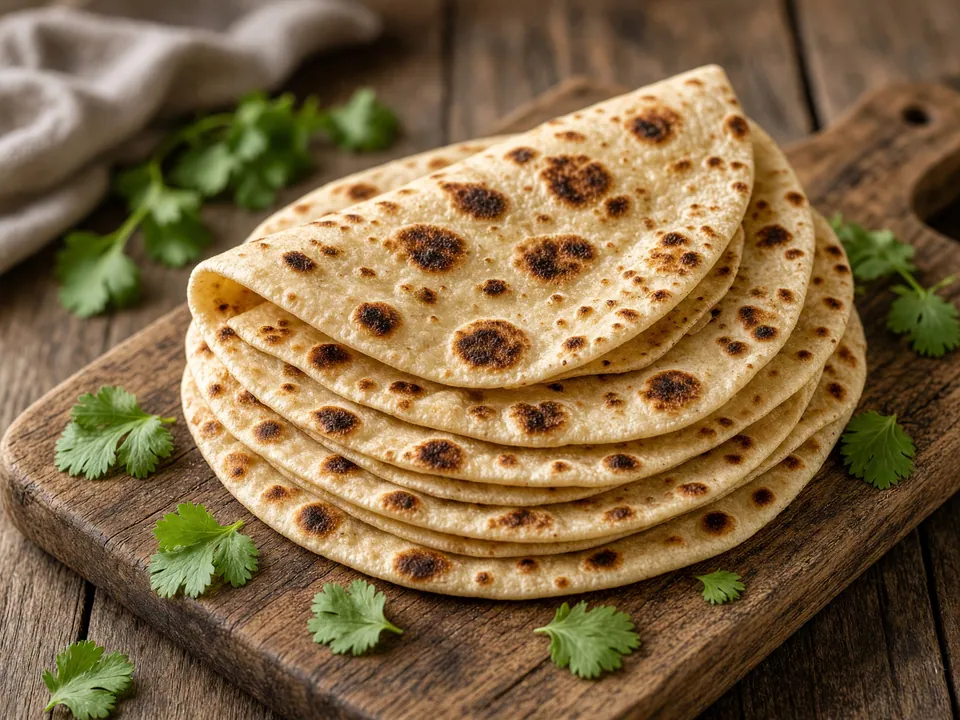
Chapati is the everyday unleavened flatbread that accompanies almost every Pakistani meal. Made from whole-wheat flour and cooked on a hot tawa, it develops a soft, pliable texture with characteristic brown spots. Families tear pieces to scoop up dal, curries, or vegetables; it is eaten at breakfast, lunch, and dinner throughout Pakistan and is the cornerstone of simple home cooking.
Pakistani Chapati (Chapati)
چپاتی, Chapati
Pronounced chuh-PAH-tee
- Serves
- 8
- Prep
- 15 min
- Cook
- 15 min
- Total
- 30 min
- Level
- Easy
Also nut-free and egg-free.
Allergens: contains gluten. Check labels on packaged ingredients.
Ingredients
Amounts are scaled. Cooking times and pan sizes stay the same.
Method
In a large mixing bowl, combine the whole-wheat flour and salt. Make a well in the center.
Gradually pour in the warm water while mixing with your hand until a rough dough forms.
Knead on a clean surface for 5–7 minutes until the dough is smooth, soft, and slightly elastic.
Cover the dough with a damp cloth and let it rest at room temperature for 15–20 minutes.
Divide the rested dough into 8 equal portions and roll each into a smooth ball. Keep the balls covered while you work.
Heat a cast-iron tawa or heavy skillet over medium-high heat until hot.
On a lightly floured surface, roll one ball into a thin circle about 6–7 inches (15–18 cm) in diameter, rotating the dough often to keep it round.
Place the rolled chapati on the hot tawa. Cook for 30–40 seconds until small bubbles appear on the surface and the underside shows light brown spots.
Flip the chapati and cook the second side for another 30 seconds. Press gently with a clean cloth or spatula to help it puff.
Remove from the tawa and wrap in a clean kitchen towel to keep soft. Repeat with the remaining dough balls.
Regional variants
In some Pakistani households a little yogurt is added to the dough for extra softness, while in rural areas a thicker version called roti is sometimes cooked directly on hot coals.
Cook's notes
- Use fresh whole-wheat atta for the softest texture; older flour can make the chapati stiff.
- The tawa must be properly hot—if the first chapati does not show bubbles quickly, increase the heat slightly.
- Stack the cooked chapatis wrapped in a towel or in a covered container to trap steam and keep them pliable.
Serve with
Dal, curries, sabzi, or with tea at breakfast
Make ahead and storage
Cooked chapatis can be refrigerated up to 2 days or frozen; reheat on a hot tawa or in a dry skillet for 20–30 seconds per side.