Red Noodle Soup with Crab (Bánh Đa Cua)
Bánh đa cua Say it: bahn dah koo-ah
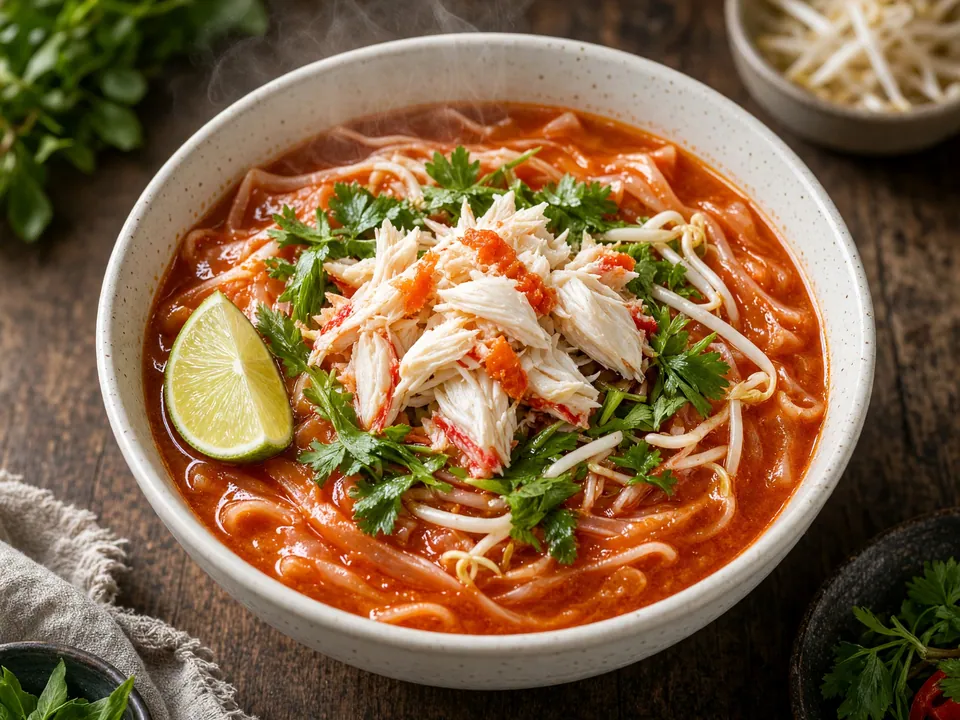
Bánh đa cua is a signature noodle soup from the northern Vietnamese port city of Haiphong. Wide, reddish-brown rice noodles are served in a fragrant broth made from crab and tomatoes, then topped with sweet crab meat, shrimp paste, and a generous handful of fresh herbs. The dish offers a harmonious blend of savory, slightly sweet, and bright umami flavors that highlight the fresh seafood of the Gulf of Tonkin. Locals enjoy it for breakfast or a quick lunch, making it a comforting everyday classic that captures the simple sophistication of Haiphong’s coastal cuisine.
Red Noodle Soup with Crab (Bánh Đa Cua)
Bánh đa cua
Pronounced bahn dah koo-ah
- Serves
- 4
- Prep
- 30 min
- Cook
- 45 min
- Total
- 1 hr 15 min
- Level
- Medium
Also nut-free and egg-free.
Allergens: contains shellfish. Check labels on packaged ingredients.
Ingredients
Amounts are scaled. Cooking times and pan sizes stay the same.
For serving
Method
Bring a large pot of water to a boil and cook the bánh đa noodles according to package instructions until just tender, usually 3-5 minutes. Drain, rinse under cold water to stop the cooking, and divide evenly among four large serving bowls.
In a large pot, heat the vegetable oil over medium heat. Add the sliced onion and minced garlic and sauté until fragrant and the onion begins to soften, about 2 minutes.
Add the tomato wedges and cook, stirring gently, until they start to break down and release their juices, about 4 minutes.
Add the cleaned crab pieces (and shrimp if using) to the pot. Stir to coat them with the tomato-onion mixture and cook for 3 minutes until the crab shells turn bright orange.
Pour in the 6 cups (1.4 L) of water or stock. Stir in the shrimp paste, salt, sugar, and crab roe if using. Bring to a gentle boil, then reduce the heat and simmer uncovered for 20-25 minutes until the broth is richly flavored and the crab is fully cooked.
Taste the broth and adjust with more salt or a pinch of sugar if needed. It should taste savory, slightly sweet from the tomatoes, and deeply infused with crab.
Using tongs, remove the large crab pieces from the broth. Let them cool slightly, crack open the shells, extract the sweet white crab meat, and return the meat to the broth. Discard the shells.
Ladle the hot broth, crab meat, tomatoes, and onions generously over the noodles in each bowl.
Top each serving with a handful of bean sprouts, sliced perilla leaves, and chopped Vietnamese coriander. Serve immediately with lime wedges, sliced chilies, black pepper, and extra shrimp paste on the side.
Regional variants
Some Haiphong cooks add fried tofu or pork blood curd for extra texture. Modern versions occasionally include a spoonful of tomato paste to intensify the broth’s red hue.
Cook's notes
- Fresh crab delivers the best flavor; ask your fishmonger to clean it. If using frozen crab, thaw completely in the refrigerator before cooking.
- Look for bánh đa đỏ noodles in Vietnamese markets for their signature fermented flavor and reddish color. Wide rice noodles can be substituted if needed.
- Rinse the cooked noodles in cold water to keep them from sticking together while the broth simmers.
Serve with
Fresh herbs, lime wedges, and a small dish of diluted shrimp paste for dipping crab meat. A cold Vietnamese beer pairs well.
Make ahead and storage
The crab broth can be prepared up to 2 days ahead and refrigerated. Reheat gently and cook fresh noodles just before serving.